Summarize with
Gutter systems serve as the primary management tool for rainwater, directing flow away from the roof, siding, and foundation. When gutters fail due to debris or mechanical damage, water backs up under shingles and into the fascia, causing wood rot and structural instability. Persistent roof drainage issues are rarely isolated; they quickly evolve into expensive interior leaks and compromised roof decks. Addressing signs of clogged gutters immediately prevents moisture from seeping into the building envelope and preserves the integrity of the roofing material.
Right Direction Contracting, LLC, provides this guide based on years of field experience identifying how drainage failure accelerates roof aging. Understanding the relationship between water flow and structural health allows homeowners to identify risks before they require full system replacements. Routine gutter care is not just about cleanliness; it is about extending the lifespan of the entire home.
The Connection Between Gutters and Roof Health
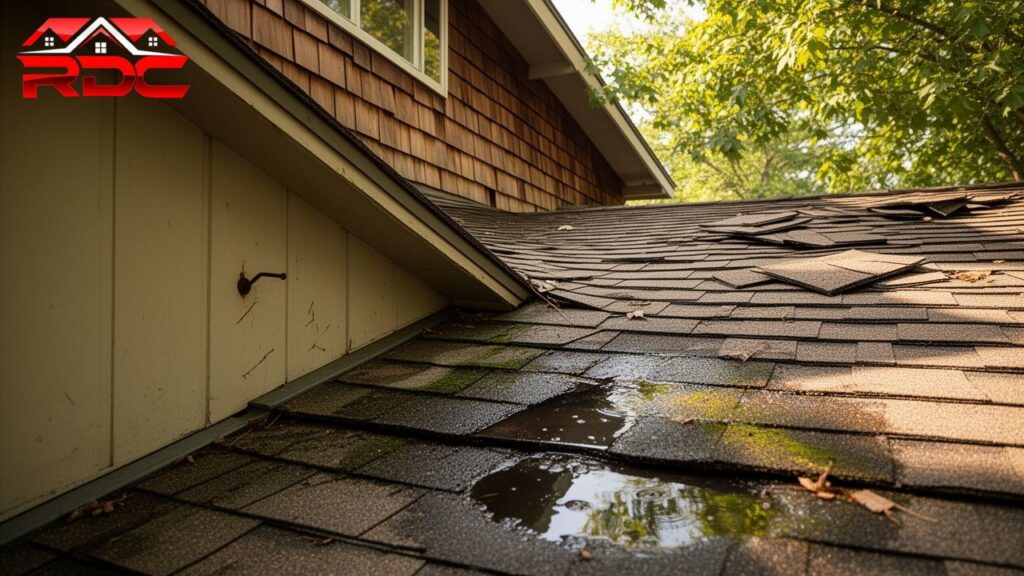
A roof relies on gravity to shed water. When gutters fill with leaves, twigs, or silt, the water loses its exit path and pools at the edge of the roof. This standing water often finds its way under the bottom row of shingles. Once moisture bypasses the shingles, it saturates the underlayment and the wooden roof deck. A report by Forbes Advisor indicates that water damage restoration can cost homeowners thousands of dollars, depending on the severity of the intrusion.
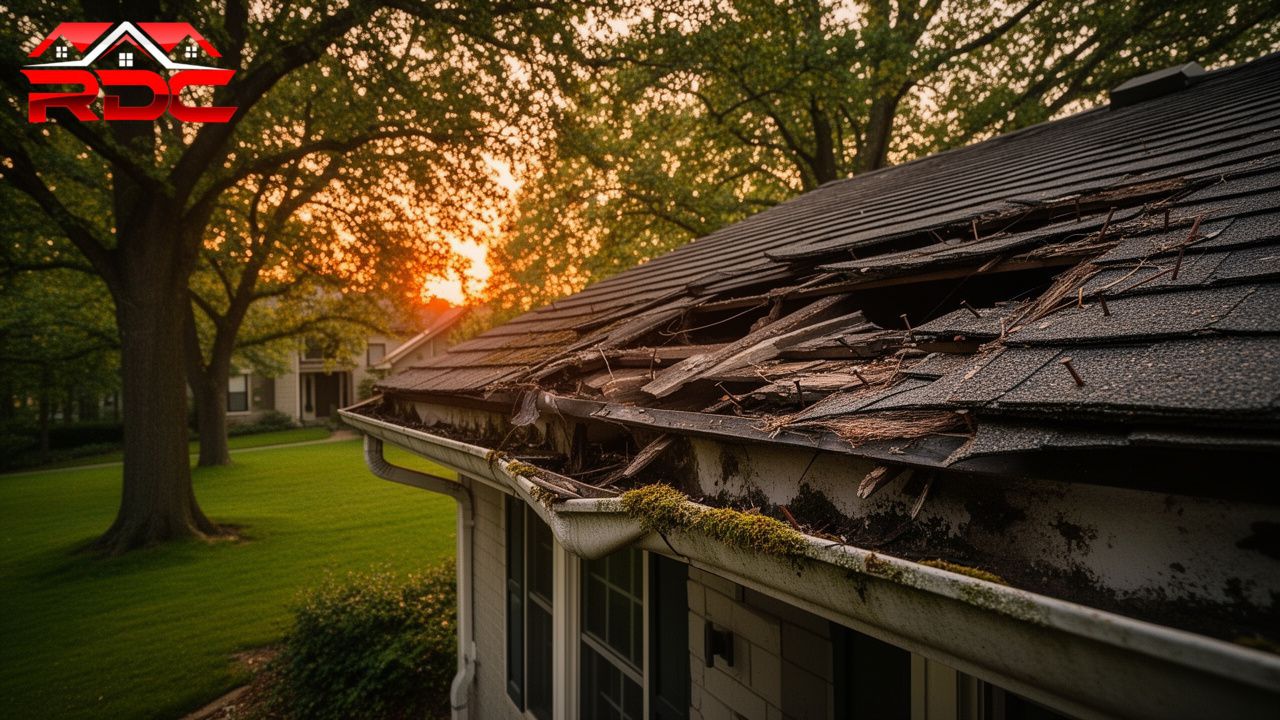
Water backup also affects the fascia boards, which are the vertical wooden pieces that gutters attach to. Constant exposure to overflow leads to rot. Rotting fascia cannot support the weight of heavy, water-filled gutters, eventually causing the system to pull away from the house. This creates a gap where rain pours directly down the siding, leading to foundation water damage and basement flooding.
Visible Warning Signs of Gutter Failure
Identifying rain overflow problems early is the most effective form of water damage prevention. Homeowners should look for specific physical indicators during and after rainstorms.
- Sagging or Pulling Away: Gutters should sit flush against the roofline. If there is a visible gap between the gutter and the fascia, the fasteners are likely failing or the wood is rotting.
- Water Marks and Staining: Dark streaks on the siding or the underside of the soffits indicate that water is escaping the gutter troughs and running down the building.
- Plant Growth: Seeds blown by the wind or dropped by birds often sprout in the nutrient-rich silt trapped in clogged gutters. If green shoots are visible from the ground, the blockage is significant.
- Peeling Paint: Excess moisture causes paint on wooden siding or trim to bubble and flake. This often happens directly behind or below a failing gutter section.
Bonus Tip: Observe the downspouts during a storm. If water only trickles out despite heavy rain, there is a blockage inside the elbow or the vertical pipe that requires immediate gutter services.
Impact of Poor Drainage on Foundation and Soil
Gutter systems protect more than just the roof. Their job is to deposit water far enough away from the home to prevent soil saturation. According to data from the National Association of Realtors, proper drainage is a top priority for maintaining property value and structural soundness. When gutters overflow, the water falls vertically and pools at the base of the walls.
This pooling leads to several problems. Hydrostatic pressure builds up against the foundation, forcing water through small cracks in the concrete. In colder climates, this trapped water freezes and expands, widening the cracks and threatening the stability of the entire house.
Technical Specifications of Gutter Materials
In addition to regular maintenance, choosing the right material during a gutter installation depends on the local climate and the specific pitch of the roof. Different materials offer varying levels of durability and weight capacity.
| Material | Average Lifespan | Pros | Cons |
|---|---|---|---|
| Aluminum | 20 to 30 years | Rust-resistant and lightweight | Can dent easily from ladders or hail |
| Vinyl | 10 to 20 years | Inexpensive and easy to install | Can crack in extreme cold or heat |
| Steel (Galvanized) | 20 years | Very strong; handles heavy snow | Will eventually rust if not maintained |
| Copper | 50+ years | Extremely durable and attractive | High cost; requires professional soldering |
Things to Consider Before Making a Decision
Before investing in gutter repair or new installation, evaluate the specific needs of the property. Not every home requires the same solution.
- Trees and Foliage: If the home is surrounded by oak or pine trees, standard gutters will clog within months. In these cases, gutter guards or high-capacity 6-inch troughs may be necessary.
- Roof Pitch: Steep roofs cause water to move at higher velocities. Standard 5-inch gutters might not be able to catch the “overshoot” during heavy storms, leading to rain overflow problems.
- Downspout Placement: Water must be directed at least five to ten feet away from the foundation. Consider adding extensions or underground tile systems to manage the discharge.
- Local Rainfall Patterns: Areas prone to sudden downpours require larger downspouts to prevent the troughs from backing up and putting weight on the roof edge.
Bonus Tip: When hiring for gutter services, ensure the contractor checks the “pitch” or slope of the gutters. Gutters must drop approximately one-quarter inch for every ten feet of length to ensure water flows toward the downspouts.
Common Questions About Gutter Maintenance
Do gutter guards eliminate the need for cleaning? No system is completely maintenance-free. While guards prevent large debris from entering the troughs, small particles like pine needles and roof grit still enter. A basic gutter cleaning guide still recommends an annual inspection to ensure no silt has built up underneath the guards.
Why are my gutters overflowing even when they are clean? This usually happens if the gutters are undersized for the roof area or if the downspouts are too small. If the roof has many valleys, water concentrates in specific areas. These “high flow” spots often need splash guards or larger outlets to handle the volume.
Can clogged gutters cause ice dams? Yes. In winter, clogged gutters prevent melted snow from leaving the roof. This water refreezes at the cold edge of the roof, creating a dam. New melt then pools behind the ice and seeps under the shingles, causing massive interior damage. Information from the International Association of Certified Home Inspectors confirms that proper drainage and attic insulation are the primary defenses against ice damming.
Critical Maintenance Schedule
Consistent gutter maintenance tips focus on timing. Most homes require cleaning at least twice a year. The first cleaning should happen in late spring after seeds and blossoms have fallen. The second, and most important, occurs in late autumn after the last leaves have dropped. If the property has many evergreens, a third cleaning in mid-summer may be required to remove fallen needles.
Ignoring these cycles leads to the accumulation of “gutter muck,” a heavy, wet sludge that places immense strain on gutter hangers. Over time, this weight warps the metal and pulls the spikes out of the wood, necessitating expensive gutter repair.
Understanding Common Concerns
Many homeowners wonder if they can handle gutter tasks themselves. While simple cleaning is possible for single-story homes, multi-story buildings present significant safety risks. Professional gutter services utilize specialized ladders and safety harnesses to prevent accidents. Furthermore, professionals can spot early signs of roof deck rot that a homeowner might miss.
Another concern is the cost of gutter installation compared to the cost of roof repair. A new gutter system is a fraction of the cost of a new roof. Protecting the larger investment by maintaining the smaller one is a standard principle in property management.
Frequently Asked Questions
How do I know if my gutters are the wrong size?
If water consistently overshoots the gutter during heavy rain, or if the troughs overflow while the downspouts are clear, the system is likely too small. Most residential homes use 5-inch gutters, but larger or steeper roofs often require 6-inch systems.
What is the best way to clean gutters without a ladder?
Several vacuum attachments and wand extensions exist for ground-level cleaning. However, these tools cannot always remove wet, packed-down debris or “gutter muck.” They also do not allow for a close inspection of the fasteners and sealants.
Why is there mold growing on my interior ceiling near the exterior wall?
This is a classic sign of roof drainage issues. When gutters clog, water wicks into the soffit and travels along the rafters into the insulation. Once the insulation is wet, mold grows quickly on the backside of the drywall.
How long does a typical gutter repair take?
Minor repairs, such as sealing a leaky corner or replacing a few hangers, usually take less than two hours. More extensive work, like replacing damaged fascia or re-pitching an entire run, may take a half-day or more.
Are seamless gutters better than sectional ones?
Seamless gutters are generally superior because they eliminate the joints where leaks most often occur. Every seam in a sectional gutter is a potential failure point where sealant can dry out and crack over time.
Summary of Maintenance Priorities
Proactive care for gutter systems is the most cost-effective way to prevent roof damage. Homeowners should prioritize keeping troughs clear, ensuring downspouts direct water away from the foundation, and inspecting fascia boards for signs of moisture. Small issues like a loose hanger or a dripping corner seam should be addressed immediately to prevent them from becoming structural problems. Regular inspections and timely repairs keep the roof dry and the foundation stable. Evaluating the current state of the drainage system today can save thousands in emergency repairs later.
Expert Assistance for Your Home
Protecting a home requires attention to detail and professional expertise. For homeowners in need of reliable gutter services, Right Direction Contracting, LLC offers comprehensive solutions ranging from minor gutter repair to full gutter installation. Maintaining a dry and secure property is the primary goal. To discuss specific drainage needs or to schedule an inspection, contact the office at (215) 930-8390 or reach out via email at rightdirectioncontracting@gmail.com. Ensuring the safety of the roof and foundation starts with a functional gutter system.
Sources
- Forbes Advisor – An analysis of costs associated with water damage and restoration in residential properties.
- National Association of Realtors – Professional guidance on home maintenance priorities and their impact on property value.
- International Association of Certified Home Inspectors – Technical explanations regarding the causes and prevention of ice dams on residential roofs.