Summarize with
Nine times out of ten, the stain on the ceiling is nowhere near the actual hole. Water comes in at a flashing joint, runs fifteen feet along a rafter, drips out over the couch. So the homeowner patches the ceiling, or pays somebody to patch the roof right above it, and the whole thing repeats in November.
Why is my roof leaking now?
Nobody’s roof breaks on the day it starts leaking.
The answer to what causes roof leaks is nearly always boring. Something small was wrong for a year or two, and one storm finally pushed enough water through it. This city gives it plenty of chances. NOAA normals for 1991 to 2020 have Philadelphia at 44.11 inches of rain a year, 6% wetter than the thirty years before, plus 23 inches of snow. Then January arrives, and the roof freezes and thaws all winter.
The NRCA attributes up to 40% of building problems to water coming through the roof, which sounds high until you have spent a few winters doing this. Catch it early, and roof repair services run four hundred dollars. Catch it in March, after the decking has gone soft, and you are looking at nine thousand.
9 common causes of roof leaks
1. Roof flashing problems around penetrations
Flashing is the metal that seals the joints. Chimney, skylight, dormer, the party wall you share with next door. If I had to guess where a leak started without seeing the house, I would say flashing, and I would be right most of the time.
Roof flashing problems show up as lifted edges, rust, caulk gone chalky, or step flashing somebody face-nailed straight through instead of weaving into the courses. That last one is the killer, and depressingly common on cheap repair work. Sealant is not flashing. On a south facing wall here, it cracks in three years, and nobody goes back up to check.
2. Cracked, curled or missing shingles
Fifteen to thirty years, depending on what you bought and how much afternoon sun that slope takes.
The mat dries out, corners curl, cracks open along the stress lines, and the granules doing the protecting wash into your gutters. Easiest check on this whole list, by the way. Go look in the gutter. Coarse black grit like sand means the surface is going.
Wind is faster and sneakier. It does not need to rip a shingle off. It only needs to break the sealant strip once, and the tab lifts in every gust after that.
3. Clogged gutters and blocked valleys
Leaves pack the gutter; rain has nowhere to go, so it backs up under the bottom course and sits on the fascia. Valleys do the same for a different reason. Two planes drain into one channel, so a valley moves more water than anything else up there and blocks just as easily.
The cheap problem, and the one everybody skips. Damage starts at the edge and works inward where you cannot see it, which is why a gutter cleaning twice a year protects more roofing than most of what people buy.
4. Failed vent boots and pipe collars
Every plumbing stack through your roof has a rubber collar, and the rubber dies long before the shingles do. Usually around year ten, while the roof still looks fine from the sidewalk. We have been called out behind quotes for whole roof sections that came down to one cracked boot, so any decent provider of roof repair services looks there first.
5. Ice dams and freeze-thaw damage
Warm attic, cold eave. Heat escapes, melts the snow up top, the water runs to the overhang where no heat comes through, refreezes, builds a little dam. Everything behind it backs up and goes underneath shingles never designed to hold water, only shed it.
Freeze and thaw does slower damage nobody notices. Water gets into a hairline crack in the chimney mortar, expands about 9% turning to ice, opens the crack a fraction wider. Then does it again next week.
6. Ponding water on flat roofs
Most articles on this were written for people with steep suburban roofs. Half this city does not have one. Row homes across South Philly, Fishtown, Kensington and West Philly sit under low slope rubber or TPO or modified bitumen, and water has nowhere to run.
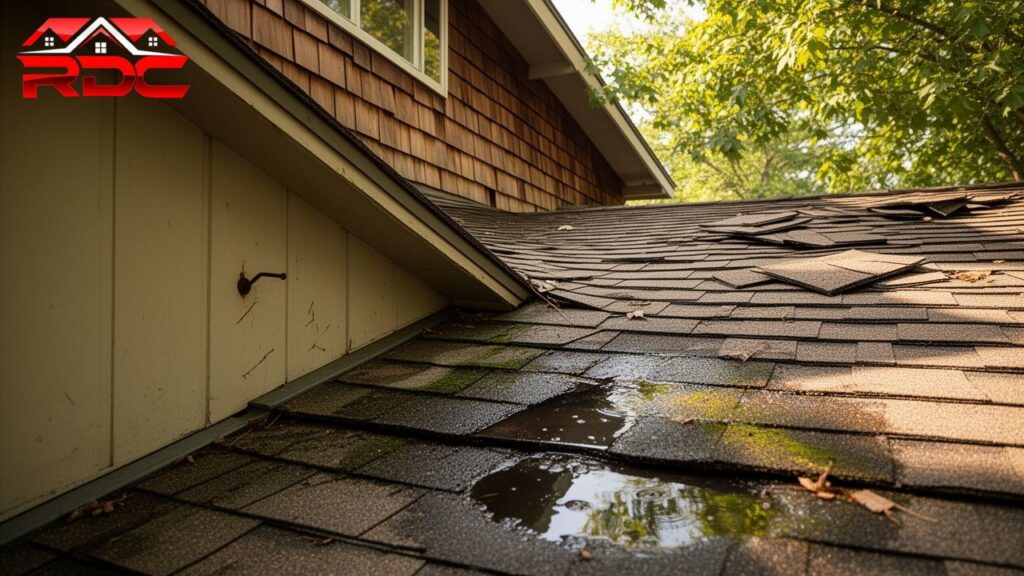
Pooled water is patient. It works at the adhesive, freezes and expands in winter, and it is heavy, around five pounds per square foot per inch. If puddles are still there two days after the rain stopped, you want roof repair services that work on low slope, not a shingle crew guessing.
7. Nail pops and fastener backout
Decking moves with the seasons. Over enough years that movement backs the nails out until they tent the shingle above, and each one is a small funnel into your sheathing. Invisible from the street. You find them by walking the roof, which is most of the argument for having somebody walk the roof.
8. Attic condensation mistaken for leaks
Not every wet ceiling is a leak, and this one gets misdiagnosed constantly, including by people who ought to know better.
Showers, cooking, laundry. All that moisture rises, hits a cold attic, and condenses on the underside of the sheathing. Then it drips and stains and looks exactly like a roof failure.
Timing gives it away. Condensation turns up on cold clear days, not during rain. If your stain appeared in a dry January week, look at ventilation before shingles. Codes want a square foot of net free vent area per 300 square feet of attic floor, intake and exhaust balanced. If that is off, no roof will fix it. The EPA wants indoor humidity under 60%.
9. Age, poor installation and bad repairs
Sometimes it is just old. Fair enough.
More often it is how it went on. Understanding the professional roof installation process helps homeowners recognize issues like undersized drip edge, wrong fasteners, and shingles nailed above the line. A second layer thrown over a first that was already failing, which we still find on houses sold in the last five years. NRCA reckons a maintained roof gets about 21 years and a neglected one 13, and that gap is mostly installation quality plus somebody looking twice a year.
Roof leak signs inside your home
Catch these before anything drips. Roof leak signs worth knowing:
- brown or yellow rings on a ceiling, darker around the edge
- paint blistering, or wallpaper letting go near an outside wall
- that musty closet smell upstairs
- dark streaks on attic rafters
- a soft patch you can push a thumb into
- daylight through the roof boards
- heating bills that jumped and you cannot say why
That last one throws people. Soaked fiberglass compresses and stops insulating, so a freezing bedroom in January is sometimes the first sign anything is wrong. Two or more at once and you should book roof repair services rather than wait for the drip.
Roof water damage causes and costs
The numbers are ugly. Per the Insurance Information Institute, water damage and freezing made up about 22.6% of homeowners’ claims between 2019 and 2023, behind wind and hail and nothing else. One in 67 insured homes files one a year. Average payout, $15,400. FEMA puts a single inch of water in a house at up to $25,000.
Now the bit that costs people money. Among the various roof water damage causes, insurers split sudden accidental damage from slow deterioration, and they are strict about it. Branch through the roof in a storm, usually covered. Flashing quietly weeping since two winters ago, usually not, because that is wear and tear to the carrier. Keep the paperwork from your inspections and any roof repair services you have had done. Boring, and the difference between a paid claim and a denied one.
What a roof leak inspection covers
A roof leak inspection should not be somebody standing in your driveway looking up.
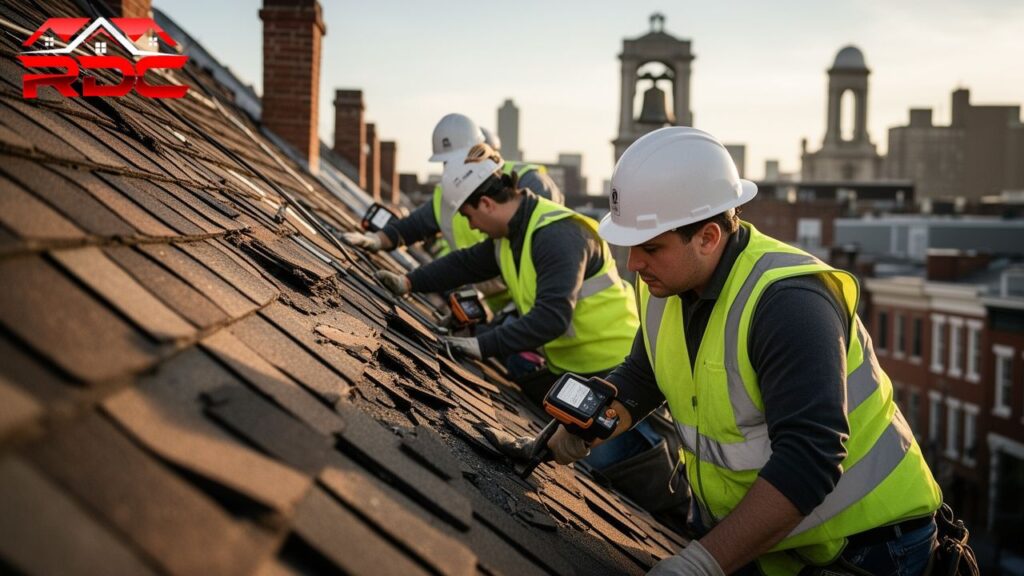
Roof surface, every penetration, every flashing joint, drainage, then the attic from underneath, because staining down there tells you more than anything on top. Expect moisture readings in the decking. Expect them to trace the water uphill from your stain instead of assuming the hole sits above it. Expect a written scope saying what is urgent and what waits.
NRCA says twice a year, spring and fall, plus after any storm worth mentioning. And anyone offering honest roof repair services should be willing to talk you out of a replacement when a repair will hold.
Roof leak prevention and repair tips
Most of what we get called out for was preventable for less than the callout. Roof leak prevention, in practice:
- clean the gutters twice a year, more if you have big trees
- keep branches six to ten feet off the roofline
- check attic venting and insulation before winter, not during
- rake the bottom few feet of snow off so ice dams have nothing to build on
- swap the vent boots around year ten and stop thinking about them
- photograph the roof each spring so you have something to compare
If it is already coming in, a few roof leak repair tips. Move your things first. Bucket underneath. If the ceiling is bulging, puncture it in one spot and let it drain where you choose instead of losing the whole panel at three in the morning. Photograph everything before you clean up; your insurer will want it. And stay off the roof while it is wet. Shingles are slick, low slope membrane is worse, and a fall costs more than the leak. Then call for roof repair services while the source can still be found.
Knowing the common causes of roof leaks mostly means you can tell when a diagnosis makes sense. Worth more than it sounds.
Frequently Asked Questions
1. Do you offer emergency roof repair services in Philadelphia, PA?
Yes, 24/7, anywhere in Philadelphia. Active leaks jump the queue. A tarp today means patching drywall next week. A tarp on Thursday means a new ceiling.
2. Which suburbs around Philadelphia do you serve?
Upper Darby, Drexel Hill, Havertown, Bala Cynwyd, Narberth, Wynnewood, Ardmore, Bryn Mawr, Villanova, Wayne, Radnor, King of Prussia, Conshohocken, Norristown, Media, Springfield, Glenside, Lansdowne, Darby, Yeadon, Merion Station. If you are near that list, call and ask.
3. Are flat row home roofs in South Philly harder to diagnose?
Usually, yes. Water spreads sideways across a low slope before it finds a way down, so the stain inside can be nowhere near the failure. A proper roof leak inspection earns its money here. Spot patching is guesswork.
4. Are you licensed to work in Pennsylvania?
Yes. PA Home Improvement Contractor License #PA184068, fully insured, and we work to Philadelphia code.
5. How much does a typical roof leak repair cost?
A boot or short run of step flashing, low hundreds. Rotten decking or several failed flashing points, considerably more. Anyone quoting before they have been up there is guessing.
6. Can I repair a leak myself?
Gutters from a stable ladder, sure. The roof itself, no. NRCA advises against it, and falls are still a main way people get hurt working on their own houses.
7. Will my homeowners insurance cover the leak?
Depends what caused it. Storm damage, generally yes. Twelve years of nobody looking at it, no. Keep your inspection records.
8. How fast should I act after spotting a leak?
Same day if you can. The EPA’s mold window is 24 to 48 hours and the bill climbs from there.
Get your roof checked before the next storm
You should not have to guess which of these nine it is.
Right Direction Contracting, LLC has been keeping water out of Philadelphia houses for years. Roofing, siding, gutters, waterproofing, with warranties on labor and materials. Our roof repair services start by finding the actual problem and showing you the evidence.
Call (215) 930-8390 or email rightdirectioncontracting@gmail.com, and we will come look for free. Somebody answers at any hour. You get the price before we start, and if it needs a repair rather than a replacement, we will say so.
Licensed and insured. PA Home Improvement Contractor License #PA184068. Philadelphia and surrounding areas.
Sources
- U.S. Environmental Protection Agency, A Brief Guide to Mold, Moisture and Your Home: epa.gov/mold
- Insurance Information Institute, Facts + Statistics: Homeowners and Renters Insurance: iii.org
- National Roofing Contractors Association, Roofing Guidelines and Homeowner Resources: nrca.net
- NOAA National Centers for Environmental Information, U.S. Climate Normals: ncei.noaa.gov