Skip to content
Summarize with
The key factors when hiring the right roofing contractor in Philadelphia, PA are that they possess a valid Pennsylvania Home Improvement Contractor (HIC) registration, they understand the differences between rowhome party walls and a suburban build, and they are willing to set the scope in writing before they take one shingle off the roof. Once you leave out one of those, or more, the job typically will not come in within the quoted price.
This is easier said than done in the housing market of Philadelphia. Older Fishtown and Kensington rowhouses share walls and often the built-up flat roofs are shared with the other house; newer construction in Fishtown or East Passyunk uses a combination of asphalt shingle and membrane roofs on additions. If a contractor has only built single-family residences with basic gable roof structures in the suburbs, he may not feel at ease with the “shared parapet wall” (or be familiar with the correct method for flashing) and that flaw won’t become apparent until the first heavy rain. Throughout this roofing contractor homeowners guide, you’ll learn what makes a reliable local roofing company in Philadelphia different from a good salesman.
Why Philadelphia’s Rowhouse Roofs Change the Equation
According to the National Roofing Contractors Association, flat and low-slope roofing systems require different waterproofing details than pitched roofs, and mixing techniques between the two is one of the more common causes of premature leaks. Any roofing contractor in Philadelphia, PA working across both flat and pitched systems needs to know where those techniques diverge. That distinction matters here because a huge share of Philadelphia’s housing think South Philly, Point Breeze, Fairmount was built with flat or nearly flat roofs designed for tar-and-gravel or, more recently, EPDM rubber or modified bitumen membranes.
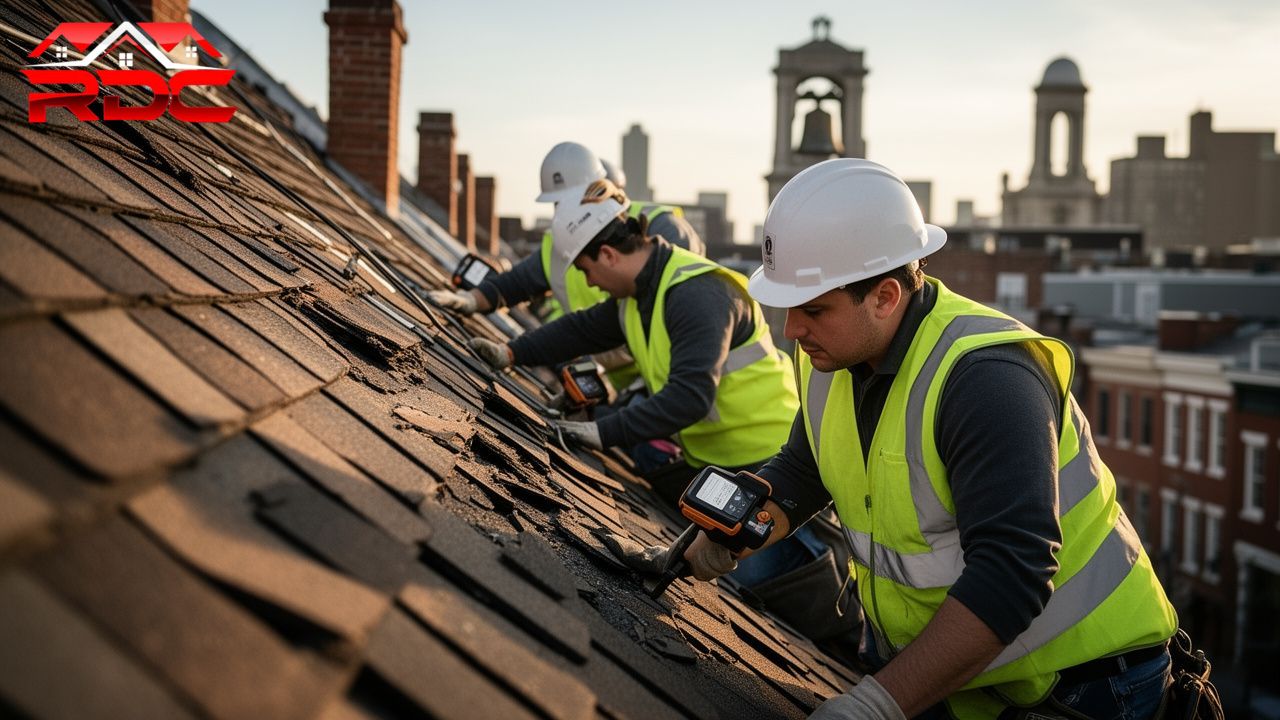
A contractor bidding a pitched-roof replacement in Chestnut Hill needs a completely different skill set than one repairing a membrane roof in Grays Ferry. The pitched job is about shingle exposure, ridge venting, and ice-dam protection along the eaves during Philly’s freeze-thaw winters. The flat-roof job is about seam welding, drainage slope toward internal or scupper drains, and parapet wall flashing that ties into the neighbor’s roof without creating a shared leak point. Ask any roofing contractor in Philadelphia which system they’ll actually be installing, not just what they “do roofing,” and you’ll learn a lot from how specifically they answer.
Comparing Roofing Systems in Philadelphia Homes
Philadelphia’s building stock generally falls into three roofing categories, and the right choice depends more on the structure than personal preference.
| Factor | Asphalt Shingle (pitched) | EPDM/Rubber Membrane (flat) | Modified Bitumen (flat) |
|---|---|---|---|
| Typical use in Philly | Twins, single-family homes with pitched roofs | Rowhomes, additions, older flat-roof stock | Older rowhomes, mixed-use buildings |
| Climate suitability | Handles freeze-thaw well with proper venting | Resistant to ponding but seams need periodic inspection | Torch or cold-applied seams hold up to UV and heat cycling |
| Maintenance | Annual gutter/flashing check | Seam inspection every 1-2 years | Recoating every 5-8 years extends life |
| Typical lifespan | 20-30 years | 20-25 years | 15-20 years |
| Party-wall complexity | Low unless it’s a twin | High shared parapet flashing is common | High same shared-wall issue |
What a Real Roofing Estimate in Philadelphia Should Include
A written roofing estimate in Philadelphia should specify the deck condition (whether plywood needs replacing versus just the shingles or membrane), the underlayment type, ventilation changes, disposal method for tear-off debris which matters in rowhouse blocks with tight alley access — and a line item for flashing at chimneys, skylights, and party walls. If an estimate is a single lump-sum number with no breakdown, that’s usually a sign the roofing contractor in Philadelphia you’re talking to hasn’t actually walked the roof yet, or is hoping you won’t ask questions.
Philadelphia’s Department of Licenses and Inspections requires a building permit for roof replacement work that involves structural changes to decking, and any legitimate roofing contractor in Philadelphia, PA should be able to tell you, without hesitation, whether your project needs one. Contractors who wave off permit questions with “we don’t usually bother” are telling you something important about how they’ll handle the rest of the job too.
Verifying a Licensed Roofing Contractor Before You Sign Anything
Pennsylvania requires anyone performing home improvement work over $5,000 to hold an active Home Improvement Contractor registration through the state Attorney General’s office. A licensed roofing contractor in Philadelphia should provide their HIC number without being asked twice, and it’s worth cross-checking it rather than taking it on faith registration lookups are public.
Beyond state registration, ask for proof of general liability insurance and workers’ compensation coverage. Roof work is one of the more dangerous residential trades, and a contractor without workers’ comp can leave a homeowner exposed if someone gets hurt on a three-story rowhouse roof.
Roofing Company Comparison: Step-by-Step Process for Vetting Your Options
- Request three written estimates from contractors who each physically inspect the roof deck, not just the exterior from the street.
- Verify HIC registration and insurance for every contractor still in consideration before scheduling a second visit.
- Ask for two recent references from jobs completed within the last twelve months, ideally on a similar roof type rowhouse flat roof, twin, or full pitched replacement.
- Compare scope, not just price, and each estimate’s material specs, warranty terms, and disposal plan side by side.
- It is important that contractors acquire the permit themselves, but others may want the homeowner to; this should be included in the contract.
- It is normal to look at the payment schedule prior to starting work, but it is a sign of trouble when the contractor insists on getting paid upfront.
- Have the warranty written in the form of a contract, and make sure you know if it covers labor, materials or both, and for how long.
Mistakes That Turn a Simple Roof Job Into a Long-Running Dispute
Homeowners often accept the lowest bid without checking whether it includes deck repair, and then get hit with a change order once the old roofing comes off and the plywood underneath turns out to be soft. That’s not always a scam sometimes rot genuinely isn’t visible until tear-off but a contractor who never mentions the possibility upfront is setting up a surprise instead of preparing you for one. A careful roofing contractor in Philadelphia, PA flags these issues before signing, not after.
Things to Consider Before Making a Decision
- Roof type and pitch
A flat rowhouse roof and a pitched twin roof are different trades in practice, even if both fall under “roofing.”
- Deck condition unknowns
Ask how the contractor handles unexpected rot discovered during tear-off, and get that policy in writing.
- Permit responsibility
Confirm in the contract who pulls the permit and who’s listed as the responsible party with L&I.
- Warranty scope
A material warranty from the manufacturer is not the same as a labor warranty from the contractor you want both spelled out.
How to Choose a Roofing Contractor: Answers to Common Questions
Homeowners tend to ask a similar set of questions once they start collecting estimates. For instance, one of the most common is whether a lower bid from an out-of-area contractor is worth the savings compared to a Philadelphia-based crew that already knows the city’s permitting process and rowhouse quirks. Usually, it isn’t, once travel delays and unfamiliarity with local inspection requirements get factored in.
Do I need a permit to replace my roof in Philadelphia?
Structural deck replacement projects generally do require Department of Licenses and Inspections (DLI) permits, whereas simple reroofing (like-for-like) projects may not require a permit. If you are considering a project in the city, you should have a contractor who has worked there regularly confirm which is true for your project.
How long does a typical roof replacement take in Philadelphia?
A straightforward pitched-roof shingle replacement on a rowhouse usually takes one to two days, weather permitting, while flat-roof membrane replacements with tie-ins to neighboring parapets can take longer due to coordination and access constraints.
Should I get roofing estimates in Philadelphia during winter?
Winter estimates are fine and sometimes catch problems that summer inspections miss, like ice damming evidence along the eaves, but actual installation work is weather-dependent and membrane adhesives in particula,r perform better above certain temperature thresholds, so scheduling may shift into spring.
What’s the difference between a roof repair and a full replacement?
Roof repair is for a specific area such as a damaged flashing seam, section of missing shingles or ponding area in a membrane roof, while a roof replacement involves removing the roofing system completely to the deck. With a contractor who looks at the entire roof, not just the area reported for a leak, you can get a straight answer from them as to which one you actually need.
How do I use a roofing contractor checklist effectively when comparing bids?
A roofing contractor checklist works best when you fill it out identically for each bidder same questions about licensing, insurance, deck inspection findings, and warranty terms so you’re comparing apples to apples instead of just comparing final price.
Do roofing warranties cover storm damage?
Contractor labor warranties typically cover installation defects, not storm damage, which is usually a homeowner’s insurance matter. Before jumping to the conclusion that it will be covered by a warranty, it is important to understand the difference.
What questions should I ask before signing a roofing contract?
Before agreeing to a contract, have clear answers to each of these questions: What are the deck condition contingencies? Who is responsible for the permits? When will payment be due? How will warranties apply to your deck’s work? What is the estimated time of completion?
Expert Advice for Philadelphia Homeowners
Those homeowners who are happy with the results a year later are typically the ones who saw their roofing contractor in Philadelphia, PA as a candidate to hire and not a bid war. They did not reduce their speed when they were estimating but instead when they were installing. They asked contractors to inspect the deck in person, they compared scope line by line instead of chasing the lowest number, and they confirmed licensing and permit responsibility before signing anything. Roofing is not a project where the cheapest bid and the best outcome are usually the same thing, particularly on Philadelphia’s older rowhouse stock where shared walls and aging decking add complications a suburban roof simply doesn’t have.
Expert Support for Your Roofing Project
Right Direction Contracting, LLC works with Philadelphia homeowners on both pitched and flat-roof projects, from deck inspection through final flashing details on shared rowhouse walls. Contact Right Direction Contracting, LLC at (215) 930-8390 or email rightdirectioncontracting@gmail.com to schedule an on-site inspection and get a written estimate that accounts for your roof’s actual condition, not just its square footage.
Sources
- National Roofing Contractors Association — technical guidance on pitched vs. low-slope roofing systems: https://www.nrca.net
- City of Philadelphia, Department of Licenses and Inspections — permitting requirements: https://www.phila.gov/departments/department-of-licenses-and-inspections/
- Pennsylvania Office of Attorney General — Home Improvement Contractor registration lookup: https://www.attorneygeneral.gov/protect-yourself/home-improvement-consumer-bill-of-rights/